

Reflections from the inaugural Industrial Water Forum.
For decades, industrial water has periodically been framed as ’the next big thing.’ Each cycle brought conviction, but rarely the structural conditions required for sustained adoption.
This time, the underlying conditions appear materially different.
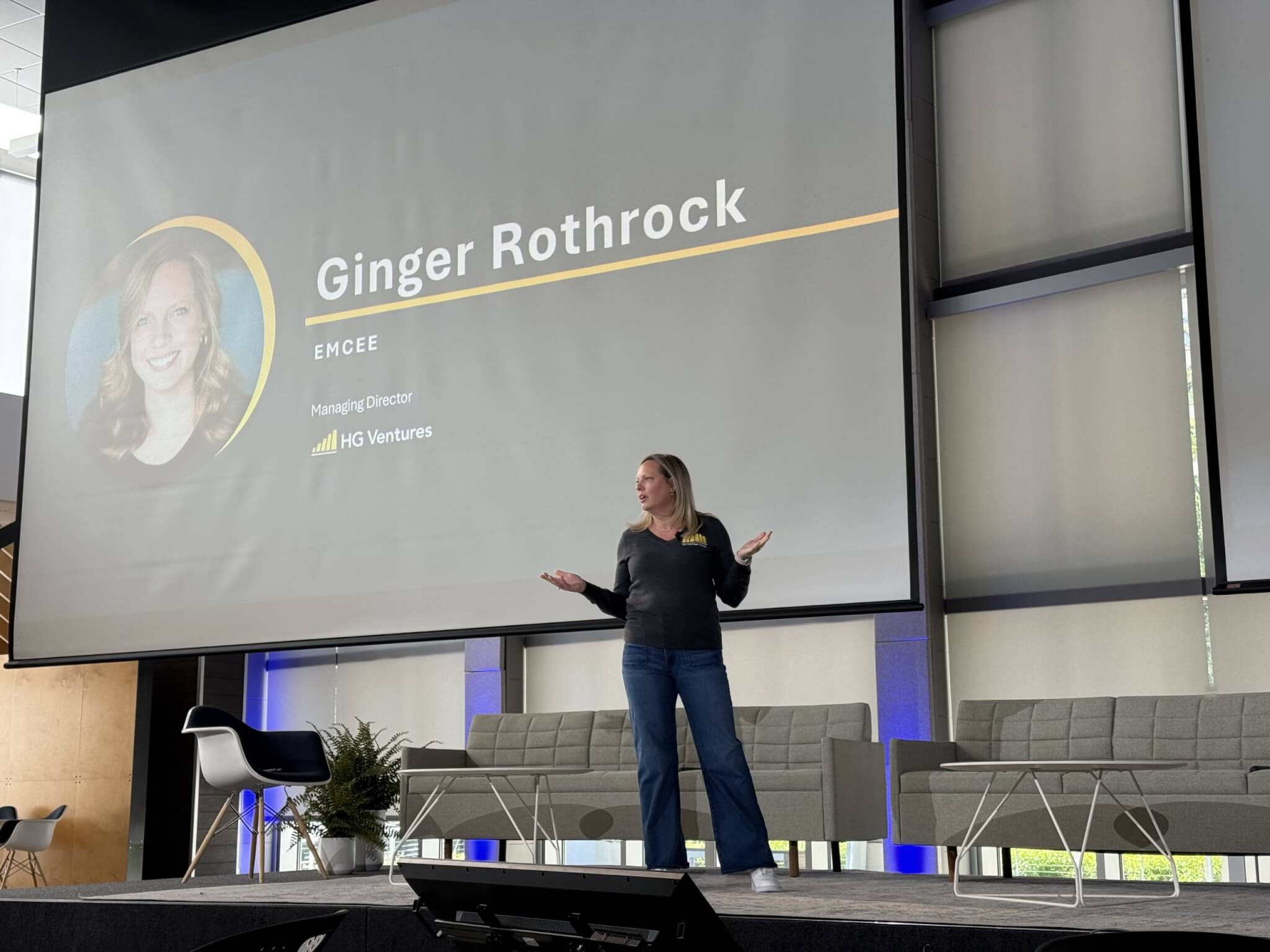
Across capital flows, operating practice, regulation, and workforce, the signals we have been tracking have started to look less like another wave of enthusiasm and more like a real turning point. That is why we decided the moment was right to convene the Industrial Water Forum, which we co-hosted with Xylem at our headquarters in Indianapolis on April 30. More than 120 senior operators, founders, investors, and water experts spent the day with us, and the conversation confirmed many of the signals we have been tracking across the market.
The clearest articulation of that difference came from Antoine Walter, host of the (Don’t) Waste Water podcast, who opened the day. Antoine sketched three eras of water management: a long century of “the solution to pollution is dilution;” a century of vast centralized infrastructure; and now, an era of ‘marginal gains’.

The argument that mattered most, though, was Antoine’s observation that five long-running pressures in industrial water are accelerating simultaneously: physical infrastructure; the economics of water inside operating businesses; the workforce that runs all of it; the boundaries between sectors; and the regulatory environment. Together, they signal a structural change in the market.
Those same pressures surfaced repeatedly throughout the day, across operators, investors, utilities, and technical companies. Here are our key take-aways.
Infrastructure and economics finally rhyme
The infrastructure deficit is no longer abstract. Antoine Walter’s estimate of the true global water infrastructure gap — north of $48 trillion, roughly half the world’s annual GDP — puts the official $14 trillion figure in proper perspective. The official number is what utilities plan to spend; the bigger number is what is actually needed.
Aging systems, extreme weather, and rising community resistance to large new water users, with data centers emerging as a focal point, are creating a problem that no longer permits deferral.

What is new is that capital is starting to meet that reality on its own terms. Tom Ferguson of Burnt Island Ventures reframed water for the room as a “defensive, foundational, high-growth asset class”, not the charity-case investment category it was treated as a decade ago. The data behind this reframing was striking: water pricing rising at four times the rate of GDP in 2023–24; $8 billion in liquidity events in 2025 against a projected $3 billion; private equity activity up 3.5x year over year; exits up 7x since 2020. Series B through E rounds now exist in water tech where they barely did in 2019. The deficit and the capital are starting to rhyme.
The clearest takeaway from the morning corporate operator panel, moderated by Kristen Siemen, sustainability advisor to The Heritage Group and former Chief Sustainability Officer at General Motors, was that water continues to be materially undervalued on corporate balance sheets.

Cheap on the bill of materials but business-critical, water rarely justifies investment on cost-savings arguments alone. The shift happens when water moves from an efficiency discussion to a risk discussion: supply chain resilience, license-to-operate, operational continuity, and regulatory exposure. That conversation moves capital in ways that efficiency arguments alone never have.
The talent transition is real, and underestimated
If economics is the loudest of the five forces, workforce may be the most underappreciated. The “silver tsunami” came up across multiple sessions: an estimated 50% of utility institutional knowledge could retire in the next five years. The risk is not simply labor shortage. It is the potential loss of decades of operating knowledge that has quietly kept aging infrastructure functioning. That is happening exactly as the sector is being asked to digitize, modernize, and absorb new contaminant rules.
The generational transition also creates opportunity. Younger workers bring the digital fluency the sector increasingly needs, while experienced operators carry decades of institutional knowledge that cannot be easily replaced. But the prerequisite is sobering: 90% of utilities still manage primary data on paper, and even sophisticated industrial operators lack line-level water metering across many of their facilities. Before AI optimizes anything, basic digitization has to happen. That is the current ceiling on optimization, not algorithm sophistication. It is also one of the more investable gaps surfaced across the day.
Sector boundaries are dissolving
Industrial water has historically been compartmentalized, with food, beverage, pharma, semiconductors, power, and utilities each running their own play. What we heard in the afternoon, included in the resource-recovery panel moderated by Walt Kozlowski of Xylem, suggests that one of the clearest market shifts is the erosion of traditional sector boundaries.

Point-source treatment is moving upstream across sectors. Treating contamination closer to its source reduces variability, regulatory risk, and long-term cost. Waste-to-value economics are reinforcing the same trajectory: copper recovery from semiconductor wastewater, protein recovery from food processing streams, sulfuric acid recovery from fab effluents. In more settings, waste streams are being reconsidered as recoverable production assets rather than disposal liabilities.
Corporate adoption is following multiple pathways at once — accelerators, venture arms, plant-level pilots, and product portfolio integration — and the dominant constraint is no longer technical. As more than one panelist put it, behavior change is harder than technology. Internal champions, procurement education, and institutional inertia are the stubbornest obstacles in this market, not capability.
Regulation as catalyst, not constraint
PFAS dominated the regulatory conversation, though not in the way we expected. The patchwork of federal, state, and local timelines is creating real uncertainty. But that uncertainty, paradoxically, is driving rather than delaying investment. Companies are increasingly unwilling to wait for regulatory certainty that may never arrive.
A consistent theme from the resilient infrastructure panel, moderated by Daniel Benitez of Veralto, was the need to build flexible systems that can adapt to unknown future regulations rather than optimize narrowly for today’s rules. As standards continue to shift, operators are prioritizing modular infrastructure, point-source treatment, and deployment models that preserve optionality instead of locking facilities into rigid long-term designs.
Regulation in this category will keep moving; the strategic question is whether an organization’s operating model can move with it.
Why all five at once changes the calculus
None of the forces Antoine highlighted are entirely new. Industrial operators have been managing water risk, aging infrastructure, workforce constraints, and regulatory pressure for years. What feels different now is that these forces are no longer evolving separately. Capital is accelerating into the market at the same moment workforce turnover is forcing digitization, sector boundaries are blurring around point-source treatment and resource recovery, and regulatory uncertainty is pushing operators toward modular, outcome-based deployment models.
Together, these shifts are changing how industrial operators think about water: less as a utility cost, and more as strategic infrastructure.
We are not declaring industrial water solved. The data infrastructure gap is real; the shared measurement framework that water still lacks — the GHG Protocol equivalent that came up repeatedly — is a meaningful constraint on corporate adoption; plant-level execution remains hard, and behavior change is slower than any technology curve. None of that should be glossed over.
But the room in Indianapolis offered the strongest evidence we have seen that this cycle is structurally different. The Series B–E rounds, the dedicated water funds, the corporate venture arms, the deployed installations, and above all the candor of operators willing to say what isn’t working, all point in the same direction. For years, industrial water remained a market defined by pilots, fragmented adoption, and difficult commercialization. The signals now look different: larger growth rounds, dedicated infrastructure capital, repeat corporate buyers, and operators increasingly willing to deploy rather than experiment.
The inflection point is the simultaneous restructuring of capital, infrastructure, regulation, workforce, and operating behavior around water as a strategic industrial system.
With thanks
Our thanks to Xylem for co-hosting, to our speakers and panelists, and to everyone who joined us in Indianapolis. The willingness of operators, founders, investors, and industry leaders to share openly across sectors was one of the strongest signals of all.