Is the “SaaSpocalypse” real? What are the implications for the application of AI in construction, infrastructure and the other areas in which HG Ventures invests? Jon Schalliol explores this brave new world.
“AI is eating SaaS” has become one of the favorite lines in venture circles. There is truth in it, but I think it misses the more interesting story.
The better question is not whether AI kills software. It is where AI changes the economics of value creation.
My own view is that AI is not wiping out software so much as repricing distance from the work. The thinner the layer, the more vulnerable it may be. The closer a product gets to a real asset, a real operator, and a real-world outcome, the more durable and valuable the opportunity can become.
Why SaaS May Be Especially Vulnerable
Earlier in my career, I spent years in Silicon Valley as a technology investment banker and tech startup founder. That gave me a front-row seat to the rise of cloud computing and the explosion of software companies that followed.
I began to notice a structural pattern. In contrast to growing up in tech in the 90s, a surprising number of companies were solving problems created by other software. They were managing workflows generated by digital systems, interpreting data from other tools, or smoothing handoffs between applications that had become complicated in the first place.
That did not make those businesses unimportant. Many created real value. But a lot of them also lived in the middle. Their product was often software managing software.
That is exactly the kind of logic AI is well positioned to absorb. When models can reason across data, automate workflows, and generate decisions dynamically, some of the reporting, orchestration, and translation layers that once justified standalone applications become less scarce.
That does not mean SaaS disappears. Far from it. Cloud software is still a massive market. Bessemer’s 2025 Cloud 100 cohort topped $1 trillion in aggregate value, and Meritech still describes public software as a market worth nearly $3 trillion. This is not extinction. It is repricing.
What Matters Now: Distance From Ground Truth
The concept I keep coming back to is distance from ground truth.
If a product is several steps removed from the underlying work, it may be easier for AI to compress. If a product is tied directly to the asset, the workflow, the operator, the image, the machine, or the field decision, it is much harder to dislodge because it is closer to the source of truth and closer to the consequence of getting it wrong.
That is why I think the next wave of enduring AI companies will not simply add one more dashboard or one more layer of digital administration. They will close the loop between perception, decision, and execution.
Where the Durable Value Lies
The hardest constraints in the economy are still physical. Roads deteriorate. Plants go down. Construction projects slip. Freight gets delayed. Assets wear out. Materials still have to be made, moved, inspected, repaired, and maintained. In those environments, mistakes do not just create annoying software tickets. They show up as downtime, rework, safety incidents, wasted capital, supply chain disruption, and slower growth.
That is why the more compelling AI opportunity is not simply building another digital productivity layer. It is connecting intelligence more directly to assets, operators, and decisions in the real world.
The current data is starting to line up behind that view. McKinsey says 88 percent of organizations now use AI in at least one business function, but only about one-third have begun scaling it across the enterprise. In other words, adoption is broad, but durable operational value is still hard won. The companies pulling ahead are redesigning workflows, not just sprinkling in AI features.
Connecting AI to the Physical Economy
This point lands especially hard in industrial settings because the workflows are messy, fragmented, and high consequence. Deloitte’s 2025 smart manufacturing survey reported gains of 10 percent to 20 percent in production output, 7 percent to 20 percent in employee productivity, and 10 percent to 15 percent in unlocked capacity. Those are not vanity metrics. That is operating leverage.
Construction and infrastructure offer a vivid example of the opportunity. Autodesk cites research showing that 95.5 percent of engineering and construction data still goes unused, and points to poor project data and miscommunication as drivers of 48 percent of rework in U.S. construction, or roughly $31.3 billion. ASCE’s 2025 infrastructure report card adds another signal, giving the United States an overall C, with roads at D+, and estimating that poor road conditions cost the average driver about $1,400 a year while congestion cost the average U.S. driver 43 hours in 2024. That is a huge amount of trapped value hiding in plain sight across the built environment.
The same pattern extends far beyond construction and infrastructure. Across manufacturing, transportation, logistics, energy, utilities, and field service, important data is still fragmented, underused, or trapped in separate systems even though the consequences are physical and immediate. Delayed shipments, unplanned downtime, deferred maintenance, safety incidents, and bad handoffs do not just create software friction. They destroy throughput, tie up labor, waste capital, and slow growth. That is exactly why AI applied close to the work can matter so much.
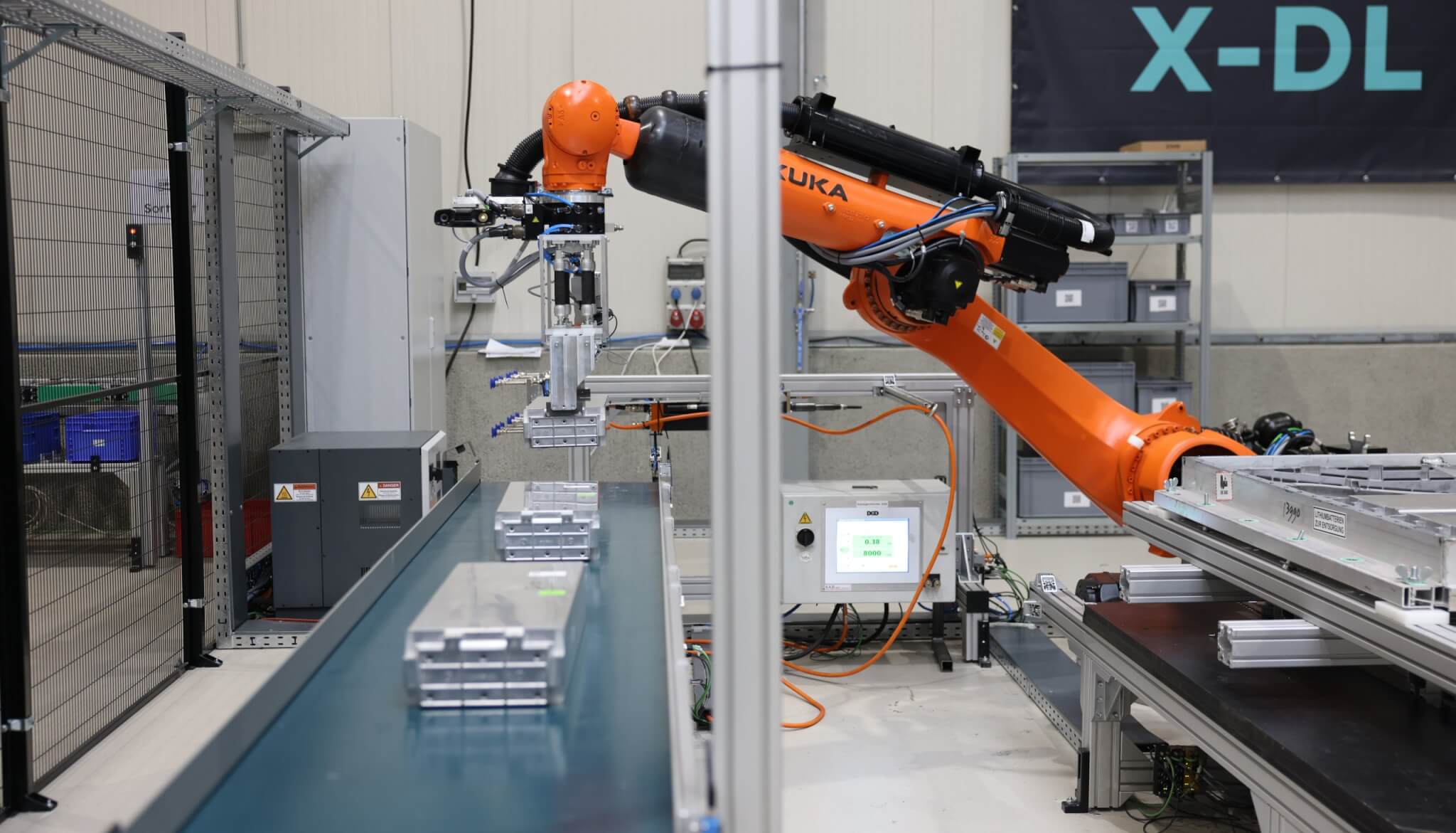
This is also why the phrase physical AI is starting to show up more often. Whether that label sticks or not, the direction is clear. The next wave is not just language models in chat boxes. It is intelligence embedded in infrastructure, equipment, mobility systems, industrial operations, and field workflows. The International Federation of Robotics reported 542,000 industrial robots installed in 2024, more than double the level from 10 years earlier. The physical world is becoming more instrumented, more connected, and more addressable by AI.
What We Are Seeing Already
We are already seeing early versions of this in the market.
In roads and transportation, StreetIQ applies AI-powered road condition scoring to help agencies assess pavement, prioritize repairs, and plan budgets more intelligently. Valerann fuses camera feeds, traffic, weather, and other roadway data so operators can detect incidents earlier and respond faster. In public works construction, PinPoint Analytics uses AI and a deep historical bid database to help contractors, engineers, and government owners estimate costs, benchmark line items, and reduce the costly guesswork that still defines too much of heavy civil preconstruction.
The same pattern is showing up across other parts of the physical economy. Circulor uses AI, digital traceability, and near real-time supply chain monitoring to help manufacturers follow critical materials, track embedded emissions, manage compliance, and prepare battery passports. Augury applies AI to machine health and process performance so plants can spot failures before they happen, reduce downtime, and improve output. Samsara uses AI across fleets and field operations to reduce crashes, coach drivers, and give operators a tighter grip on safety and utilization. Gecko Robotics combines robots, sensors, and AI to create a decision layer around critical assets in power, defense, manufacturing, and industrial infrastructure, helping operators see what is actually happening inside the asset before failures become expensive.
These are very different businesses, but they share an important pattern. They are not just digitizing paperwork in the middle of a process. They are connecting data from the real world to decisions that matter in the real world.
AI as an Amplifier
That is why I think the biggest AI opportunities, especially in industrial sectors, may bypass a lot of the middle.
As model intelligence becomes cheaper and more available, defensibility will come less from the model itself and more from deployment context: proprietary data, workflow integration, domain expertise, and the ability to drive action where the work is actually happening.
To me, that is the bigger story. AI is not simply replacing software. It is compressing certain layers, yes, but it is also shifting value toward companies that can get closer to ground truth and turn insight into action.
Some of the middle will absolutely get thinner. But the bigger prize may belong to the companies using AI to improve how the physical economy is built, operated, maintained, and moved.
When software gets close enough to the hard work of the world, it stops looking like just software. It starts to look like operating leverage.