
The Talent Gap in Robotics Isn’t Where You Think
As robotics moves deeper into industrial and infrastructure applications, the demands on talent are changing. Mitch Black looks at why execution-focused engineers are in short supply, and why that matters for companies trying to scale in the real world.
Spend enough time around robotics and you’ll hear a familiar concern: there isn’t enough talent.
That’s true, but it’s also a simplification. The real talent gap isn’t at the front end of the pipeline—universities are producing more robotics engineers, AI specialists, and researchers than ever, and the research community is vibrant, well-funded, and advancing quickly.
The gap shows up when you try to take a system out of the lab and make it work—reliably, repeatedly, and at scale—in the real world.
From Breakthrough to Throughput
There is a meaningful difference between building a prototype and building a business, and in robotics, that difference is often where things stall.
A system might work perfectly in a controlled environment, but deploying that same system on a factory floor, in a recycling facility, or on a construction site introduces a different set of challenges: variability, safety considerations, uptime requirements, integration with existing workflows… and the reality that things rarely behave as expected.
What Companies Actually Need
Robotics and other forms of automation have a huge role to play in enabling certain industrial processes to scale effectively, and we have made a number of investments in this area, most recently Molg and R3 Robotics. But when we talk with leadership teams of these companies and across our portfolio, the hiring challenge is remarkably consistent. They are not just looking for brilliant researchers, they are looking for people who can:
- Get robots working in messy, real-world environments for multiple clients (not laboratories)
- Debug complex systems under pressure
- Integrate hardware, software, and operations
- Ship, disassemble and iterate quickly, without compromising safety or reliability
In other words, they need people who can operate in a for profit setting at the intersection of engineering and execution.
Molg: Robotics Meets Reality
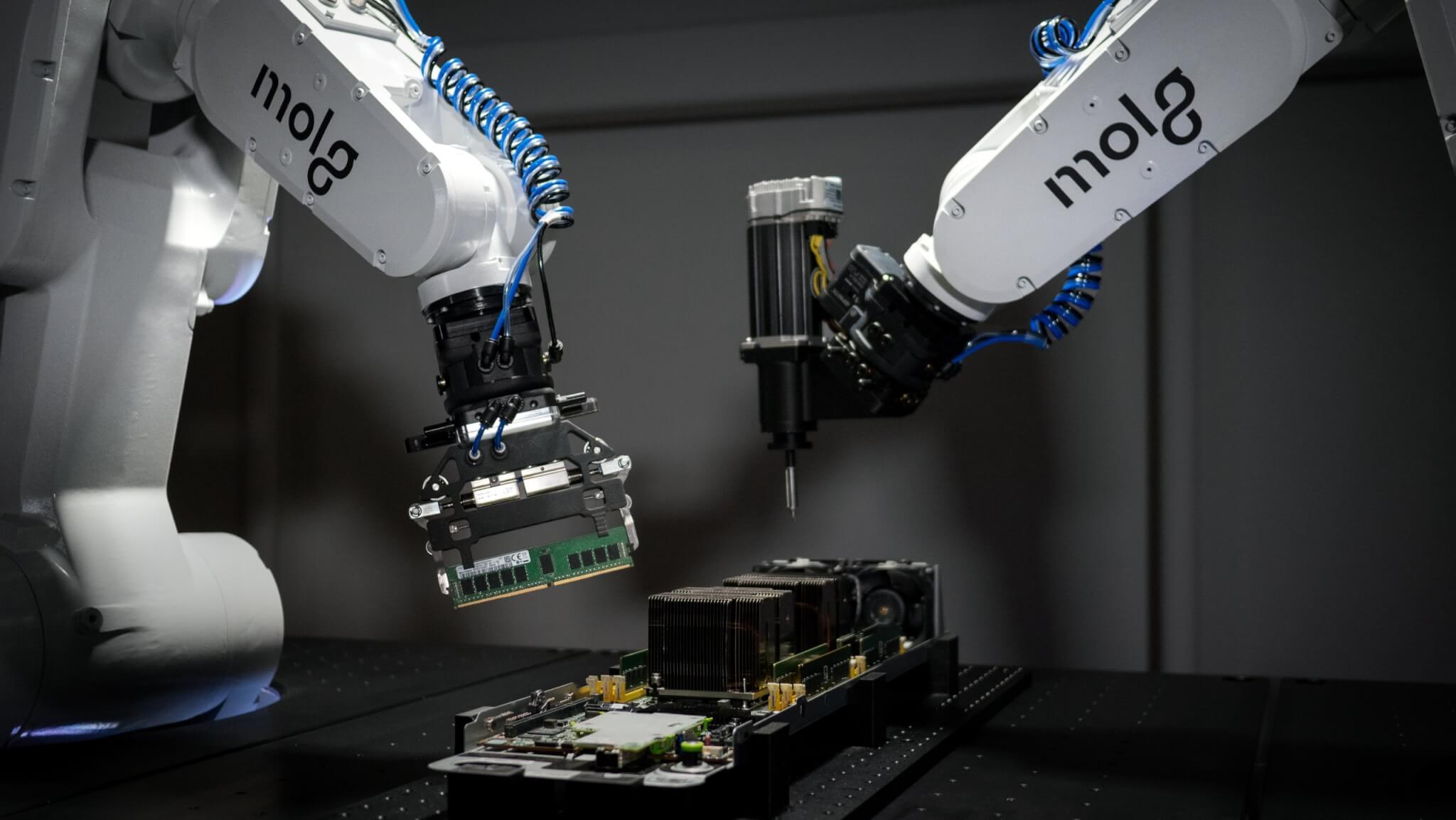
You can see this clearly at Molg. Molg is rethinking how electronics are assembled and disassembled, using robotics and automation to enable more flexible, localized, and circular manufacturing.
It’s an ambitious vision, but the bottleneck right now isn’t the idea, it’s scaling it.
Molg currently has 18 open roles, and the most critical hire is a Director of Software—someone who can lead the development of systems that don’t just work in theory, but work consistently in production, someone who can make robots perform in real environments, at speed, under constraints.
R3 Robotics: Safety, Scale, and Execution
R3 Robotics is located on the other side of the Atlantic, in Luxembourg, but we see the same pattern here.
R3 is tackling one of the most difficult and overlooked challenges in battery recycling: disassembly. Using robotics and software, the company is making the process safer, faster, and more scalable.
Once again, there is no shortage of demand; the challenge is execution.
Battery packs are heavy, hazardous, and highly variable in design, and systems need to adapt, operate safely, and maintain performance over time. That requires an engineering mindset grounded in real-world practicalities.
A Structural Mismatch
Part of the issue is structural. Over the past decade, we’ve built a talent pipeline that is heavily oriented toward research and software. That has created tremendous value, but it has also left a gap in the kinds of skills required to operationalize robotics and industrial systems.
The result is a shortage of people who can turn ideas into working systems, deployed at scale.
Why This Matters Now
This gap is becoming more important, not less. As robotics and AI move deeper into physical industries—manufacturing, infrastructure, energy, recycling—the ability to execute in real-world environments becomes a competitive advantage.
The companies that succeed won’t just have the best models or the most elegant designs, they will have the teams that can make those systems work where it counts.
Closing the Gap
There is no ‘silver bullet’ here, in fact a few things that need to happen:
- Greater emphasis on hands-on, systems-level engineering
- Closer collaboration between industry and academia
- More pathways for engineers to gain real-world deployment experience
- A recognition that “execution talent” is not secondary, it is core
At HG Ventures, this is something we think about a lot.
We invest in companies that operate in the physical world, where performance, safety, and reliability are non-negotiable. We also invest in CEOs and management teams that can attract talent and build teams. These teams need support so we work closely with our portfolio to help them find the talent they need to scale.
In robotics, the breakthrough is only the beginning. It’s what happens next that makes the real difference.
For a list of open roles at Molg and other portfolio companies, visit our Job Opportunities portal.