
Find It First: FREDsense Technologies CEO David Lloyd on PFAS detection, liability, and the water ecosystem
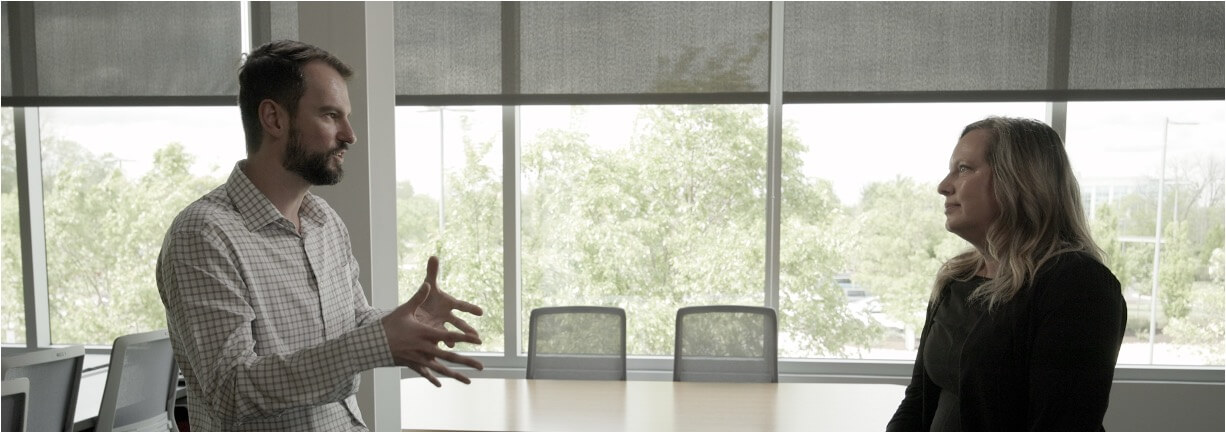
When FREDsense Technologies CEO David Lloyd visited The Heritage Group for the Industrial Water Forum recently, HG Ventures Managing Director Ginger Rothrock sat down with him to discuss why real-time PFAS detection is a critical piece of the contamination puzzle, how a ten-year-old company found new focus, and what it takes to build at the intersection of risk, liability, and industrial-scale. This conversation has been edited for clarity and length.
What FREDsense does
Ginger Rothrock (GR): David, tell me a little bit about FREDsense.
David Lloyd (DL): FREDsense is a water instrumentation company. We build portable field kits for a class of chemicals called PFAS, also called ‘forever chemicals’. These are things that maybe you think about in pots and pans, but they’re actually a huge issue across all sorts of areas of the water industry — whether it’s cleaning things up from a landfill or looking at industrial discharge, or even getting it out of drinking water. We need better ways to be able to detect it, monitor it, and right now we can’t do that in real time. And that’s what we’re here to change.
GR: You first came to The Center, [headquarters of The Heritage Group and HG Ventures,] over a year ago. How was that experience for you?
DL: Coming to the center was a really unique experience. Meeting with all of the different companies that are doing real work, whether it’s in hazardous waste or industrial applications, and just seeing the collective groups and how they can work together to really accelerate technology, solve problems… it was incredibly valuable for us.
I’m a chemist — an analytical chemist at heart — so getting to talk to some of the technical experts here and really dive into what we do in the analytical space was just a great conversation. Getting to see the resources, how we might be able to work together, and then taking that all the way into a commercial application space — looking at different types of problems on the hazardous waste material side, seeing the opportunities. It felt like a full-lifecycle type of conversation: you can go from early tech all the way out to what’s going on in the market.
Finding the right focus
GR: You didn’t start out doing PFAS. FREDsense has been around for over ten years; what made you think PFAS was the way to go?
DL: One of the interesting things about being a water technology company is the ability to look around at different market applications and see what fits — where the technology fit is strongest. FREDsense has always been a technology platform; we can build sensors on our system for a variety of different types of contaminants. It really got to the point for us where we were looking at what types of markets really fit with our style of technology and also had that application across sectors. And it was hard to ignore PFAS — there were just so many different applications for where the technology could fit. We felt like we had a unique technology that could enter the market in a way that made a lot of sense for us. So with that kind of fit, it was just hard to ignore.
What customers actually need
GR: We’ve made a number of investments in the PFAS sector — we’re managing PFAS waste all over the place. We’ve invested in other companies doing capture and destruction, but many groups don’t know when and where they have PFAS; so the fact that there’s a kit you can literally put in your car, drive out to a site, and get real-time analysis, is really exciting. What else are your customers asking for?
DL: One of the biggest challenges with PFAS is that it’s so hard to figure out where it could and couldn’t be, so we have a lot of conversations around screening of sites — just finding where it is and getting that real-time insight to decide: what am I going to do with it? How can I treat it? How can I get it out of the system?
The other piece is foresight into regulatory and liability burdens. Ultimately we need to drive this industry faster — and analytics allows us to do that. Whether it’s process optimization, control, or helping treatment providers get to market faster and develop more, that’s a huge part of what the industry needs to move forward.
HG Ventures’ PFAS journey
DL: Let me ask you, Ginger, why was PFAS such a focus for you? Can you talk about that journey and how you thought about bringing in different companies to solve this challenge?
GR: At The Heritage Group, we’ve handled hazardous waste for a really long time. Back close to when the venture group got started — around 2018 or 2019 — we were hearing from our operating companies that they were managing more and more of this thing called PFAS. We went and looked across the world and honestly only found one startup working in this space. That was Puraffinity — they were a spin-out of a lab. So we made that investment early on.
But we knew there was more technology development to be done with PFAS — not just “let’s put it on a truck and send it to an incinerator to get rid of it.” We’ve really been interested in those next-generation technologies.
In the beginning it was about capturing and destroying PFAS, but now that we know there’s PFAS everywhere — it’s in you, it’s in me, it’s in groundwater, it’s in various industrial sites — how do we know when and where it is so we can focus the treatment? That’s what made us very excited about what you guys are doing, and what that added to the technology landscape of PFAS.
Risk, liability, and the human dimension
DL: It sounds like it’s not just technology — it’s also about being a market leader. Where do you see things going as you make these investments and the markets start to expand?
GR: PFAS is a hard one. When you talk to anybody in the investing world, they say it’s all driven by regulation, all driven by the government. I don’t see it that way. You see it driven more by fear and liability in the industrial sector. You’ve got a number of different companies — obviously all over the news — that have had to pay billions of dollars to remediate their PFAS problems. So for us, it’s not necessarily a regulatory problem; it’s a risk reduction and resiliency issue. We want to make sure that industrial customers we know, all over the world, can handle this more robustly.
DL: Whether it’s sensors, treatment, or service — all of this coming together to meet that liability head on is the key thing the industry is moving towards.
GR: I agree. And then you have the human health component. These are technology solutions that benefit The Heritage Group, other waste managers, other industrial customers, but at the end of the day, it’s also about ensuring everyone’s health is as strong as possible. PFAS is definitely a chemical of interest and concern, and all the work we’re doing in this space is also aiming to help the human condition.
Building where the competition is the status quo
GR: When you’re working at this intersection of climate and regulation and industrial scale, you really need patience, because you don’t have control over everything that’s happening in your environment. How do you think about development cycles, and selling to your customers, and what drives that?
DL: When we see that nexus of new markets emerging, like PFAS — new regulatory problems that we know we’re going to have to meet — it really comes down to finding customers who are looking for partners who see where we’re going and what we need from a technology perspective.
Bringing different stakeholders together to really meet that need takes time, it takes development, and a real ability to co-create the future we want to have. PFAS is a great example of a market where we see that actively happening, and happening quickly compared to other spaces.
GR: The water industry, more than any other, requires an ecosystem. It’s not just a sensor technology — as impactful as that is. It’s also: what do you do with the data after you have it? How do you solve that particular problem? Which partners do you bring in? That’s a great part of this industry, and it requires everyone.
DL: Yes, it’s not just a technology challenge — it’s a regulatory challenge, it’s a willingness challenge, it’s all of us working together as that ecosystem to really overcome this.
We have systemic challenges: old systems that need to be digitized and modernized. We have new technology opportunities. Working together with communities to make real change takes everyone involved.
GR: It’s an interesting place when your competition is the status quo.
DL: And sometimes that’s the most difficult competitor to overcome. That’s why it really takes leadership — like what HG Ventures is doing — to foster new technologies into the market and overcome some of those challenges.
GR: With HG Ventures, we get the opportunity to partner with startups like FREDsense and bring all of The Heritage Group’s assets and expertise to bear in helping you succeed.
DL: And that’s massive for a company like us. We’re looking for what’s going to advance our technology, our market learnings, our ability to solve problems — and to work collaboratively to get there. That’s why we value this partnership so much.
Founded in Calgary, FREDsense Technologies develops portable, field-deployable detection technology for PFAS and other contaminants in water. HG Ventures is an investor in FREDsense and continues to support the company through its research group and the broader Heritage Group network. We are proud to partner with David and the FREDsense team as they bring real-time PFAS monitoring to an industry that urgently needs it.
Watch the full interview here: